The Slow Demolition of Vancouver
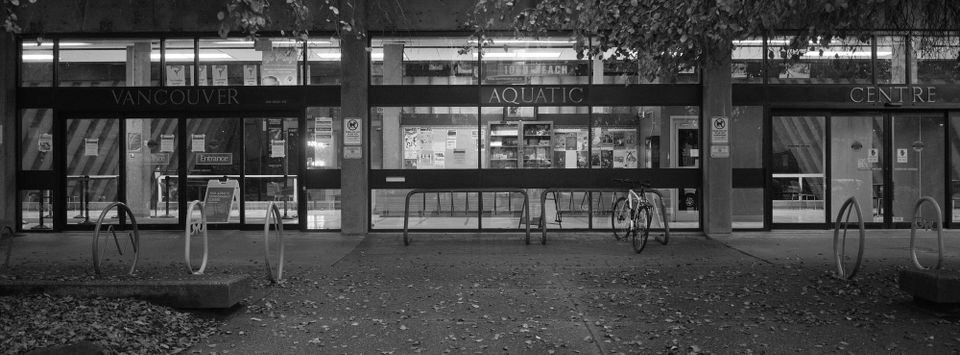
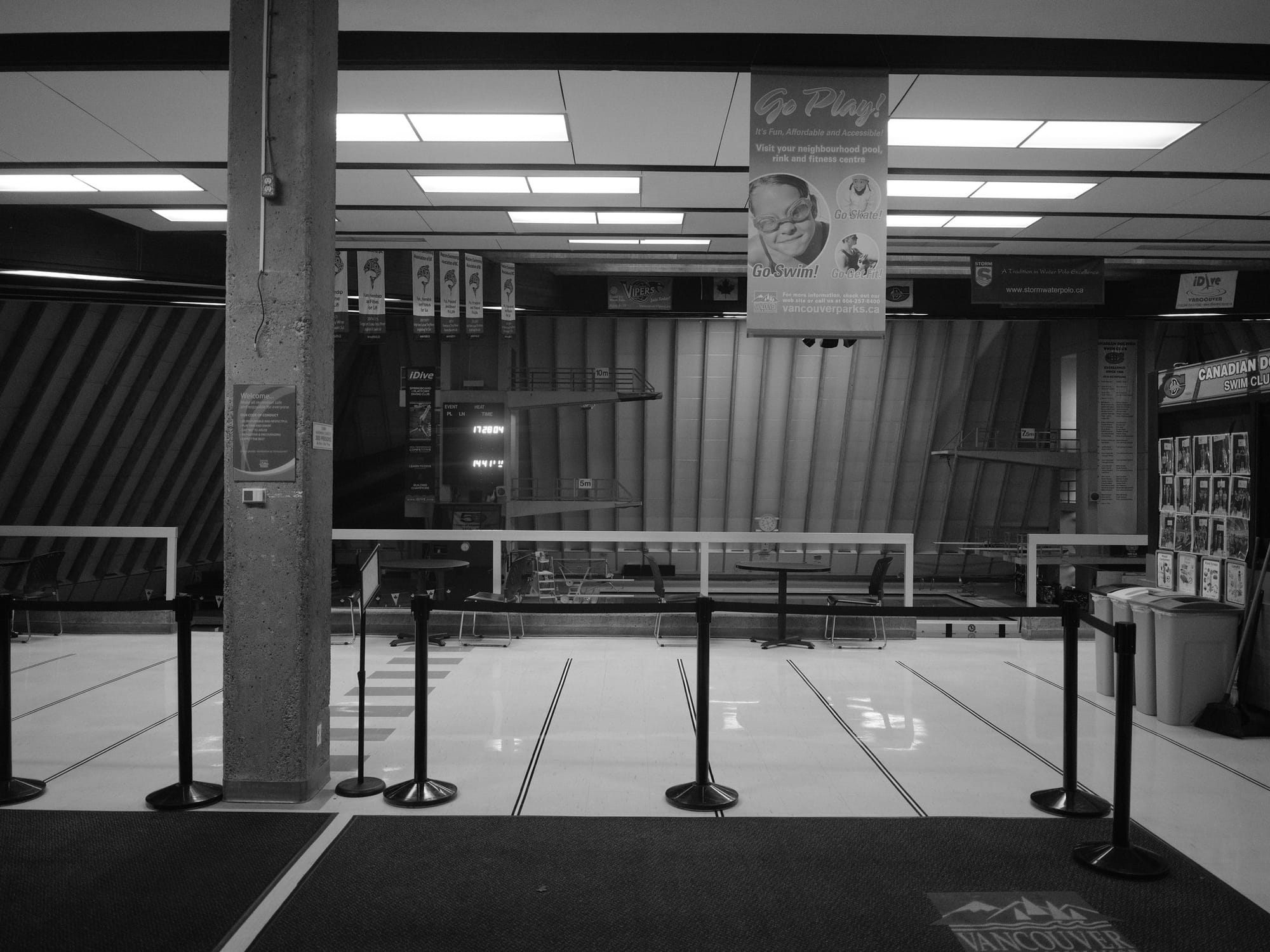
The Vancouver Aquatic Centre closed its doors for good in June 2026. By this fall, the building will be gone. Demolition equipment is already lined up — the city approved a $3.5 million contract to knock it down in July, per the council's own project report.
The building is fifty years old.
Read that again. Fifty. The Aquatic Centre opened in 1976, the year the CRTC said yes to curling on television and I was two years old. It is not a ruin. It is not a safety hazard. It is a building that somebody decided, at some point, was cheaper to demolish than to paint.
And the thing that troubles me about it isn't even the building itself. It's what the decision tells us about Vancouver — because the aquatic centre is just the most visible symptom of a disease the whole city shares.
We Used to Build Things That Lasted
If you think I'm exaggerating, read the city's own paperwork. The Current State Report that accompanies Vancouver's community centre strategy — the city grading its own homework — finds that over half of the community centre inventory is rated "poor" or "very poor" on the Facility Condition Index.
Britannia, Marpole-Oakridge, Ray-Cam, and the West End centre are all in various stages of renewal planning. Hastings Community Centre scores a facility condition of nearly 26% — firmly "poor" — and carries a high seismic risk rating, in an earthquake zone, while ABC forces through budgets that save the millionaire homeowners a few dollars a month.
Then, in September 2025, the city's Auditor General made it official. His audit covered the 46 recreation facilities the ParkBoard operates — 24 community centres, 14 pools, eight rinks — and put a number on the neglect: a funding deficit of $33 million per year, part of a citywide infrastructure deficit the AG pegs at $500 million per year.
That's not a rounding error. That's a city choosing, annually, not to keep its own buildings alive.
The Aquatic Centre didn't crumble. It was allowed to fail — a slow, budgeted neglect over decades, ending with a press release about exciting new waterfront opportunities.
The Shell Game
Here's where it gets really fun. In 2014, the city took over building maintenance for the Park Board's facilities under a formal agreement. The buildings, the boilers, the leaky roofs — that became the city's job. And ever since, the city's favourite talking point has been that the Park Board hasn't done enough to keep facilities up to date.
The Auditor General, with the patience of a man who has read all the contracts, notes that while the 2014 agreement exists, there is no operating-level agreement that actually defines who is responsible for what. A decade of shared maintenance duties, no written division of labour, and endless mutual finger-pointing.
I keep reading that sentence hoping it will make sense eventually. The city holds the wrench. The city blames the other hand for having no holes in its pocket. It's like watching someone burn down a kitchen and then complaining the chef isn't cooking fast enough.
Zero Means Zero
So why does a city with one of the healthiest downtowns in North America have community centres held together with caulking? Because Vancouver underfunds itself. Deliberately.
Our property tax rate is the lowest in the entire metro area (compare it yourself) — lower than Burnaby, lower than Surrey, lower than every suburb that supposedly envies us.
We've been treating that as a badge of honour for decades instead of what it is: a fifteen-year-olds'-homework understanding of how municipal finance works. Low taxes aren't free. They compound, just like interest — except what compounds is the repair backlog.
And the current response to all this is a budget branded "Zero means Zero," which sounds decisive until you notice that the zero applies to tax increases and not to the crumbling. A tax freeze in a city with a $500 million annual infrastructure deficit isn't fiscal discipline. It's a demolition order with extra steps. You don't save the money; you just spend it later, at demolition-contract prices.
The Auditor General, again and to his credit, says the quiet part out loud: if these gaps aren't bridged with taxpayer funding, the city will have to choose which assets it keeps and which it "decommissions" — which services it simply discontinues.
Vancouver has apparently made its choice. Ask anyone who used to swim laps at the Aquatic Centre.
Who Actually Runs the Parks?
Meanwhile, the Park Board has developed a habit of signing contracts with private operators that read like they were negotiated by the operator. No rent — instead, the concessionaire pays a percentage of revenue. Sounds reasonable. It isn't. If your income is a slice of the pie, your incentive is control of the bakery, and you've paid nothing for the oven. That arrangement means for the operators of the Prospect Point Cafe if they dislikes what the Park Board is doing — say, don’t fancy a bike lane passing their business — they can simply shut the doors and wait for the city to blink.
Which, during the Stanley Park bike lane fight, is more or less what happened. A public street in a public park was effectively held hostage by the terms of a lease the public's own board signed.
Destinations, Not Cities
And then there's the philosophy underneath all of it. The Aquatic Centre replacement is the case study.
Back in 2022, Vancouverites voted in favour of borrowing $103 million for the renewal of the Vancouver Aquatic Centre — Bylaw 13442, if you want to read the fine print yourself.
Now, the ballot question itself was lawyerly about it — the wording covered "replacement, renewal or rehabilitation," a spread broad enough to drive a zamboni through.
But nobody has to guess what voters thought they were buying, because the city's own information sheet for the plebiscitespelled it out: the proposed first phase would focus on renewing the existing 50-metre lap pool and diving pool.
The 50-metre pool was the product on the shelf. That's what the brochure said. That's what people voted for.
What the city is now delivering is a 25-metre pool. Half the length. The response to "this isn't what we were told" is essentially a shrug about modern construction costs and the desire to create yet another destination by adding a water park feature to the centre.
Notice what survived the value-engineering process and what didn't. A destination on the waterfront — render-ready, ribbon-cuttable, great for tourism brochures — fits the budget. A genuine 50-metre facility, the thing the city's own materials promised as phase one, does not.
The community was sold infrastructure. The city is delivering an attraction. And this is exactly the trap the ballot wording built: borrow against a promise vague enough to mean anything, then let the meaning shrink in private, after the votes are counted. The lawyers were careful. The swimmers weren't consulted twice.
The same logic produced another example: at English Bay, the concession stand was replaced with a Cactus Club restaurant. A chain restaurant in a public park, on public land, and then — of course — the concession portion promptly closed, because the restaurant would rather you sit down and pay table prices. We traded cheap beach food for a table minimum.
Destinations photograph well. Maintenance does not. But a city is made of Tuesdays, not grand openings — of the swim lane at 6 a.m., the bench you sit on, the parent paying four dollars for a hot dog after soccer practice.
Vancouver keeps optimizing for the photograph and tourist.
What This Says About Us
The Vancouver Aquatic Centre is fifty years old and we're tearing it down. Not because it failed, but because letting it fail was cheaper than maintaining it, and because a replacement gives someone a ribbon to cut — provided the ribbon can be attached to something a little smaller than what was promised.
Zoom out and you can see the pattern: buildings we don't repair, mandates we quietly shrink, revenue we sign away, blame we redirect, and taxes we refuse to collect.
Vancouver likes to think of itself as a green, livable, world-class city.
World-class cities fund their libraries, their pools, and their community centres.
What the Aquatic Centre tells us is that we've become very good at the branding and very bad at the boring part. The wrecking balls are coming for the pool this fall. Judging by the state of the rest of the city, they'll have plenty more to do after.
The next municipal election is on Saturday, October 17, 2026.
Sources
- City of Vancouver — Community Centre Strategy
- City of Vancouver — Community Centre Strategy: Current State Report
- Office of the Auditor General — Recreation Facility Asset Management Audit (September 2025)
- Vancouver Park Board — Vancouver Aquatic Centre Demolition Contract Award Report (July 20, 2026)
- Vancouver City Council — Aquatic Centre Project Report (July 15, 2026)
- Capital Plan Plebiscite, 2022 Election (2023–2026 Capital Plan) — Information Sheet
- Consolidated Loan Bylaw No. 13442
- Property Tax Comparison — Vancouver
- Property Tax Comparison — Vancouver (WealthNorth)