Kyoto Umekoji Kadensho Dinner — Notes on Pairing, Balance, and Restraint

Dinner at Kyoto Umekoji Kadensho, under head chef Toru Washizuka, followed a familiar Kyoto pattern: seasonal ingredients, restrained execution, and a deliberate progression from light to rich and back again. The menu sits somewhere between traditional kaiseki and a slightly more approachable obanzai-style format, with a few modern touches woven in.
What made the meal particularly interesting wasn’t just the food—it was how dramatically the experience shifted depending on the sake pairing.
A Gentle Start
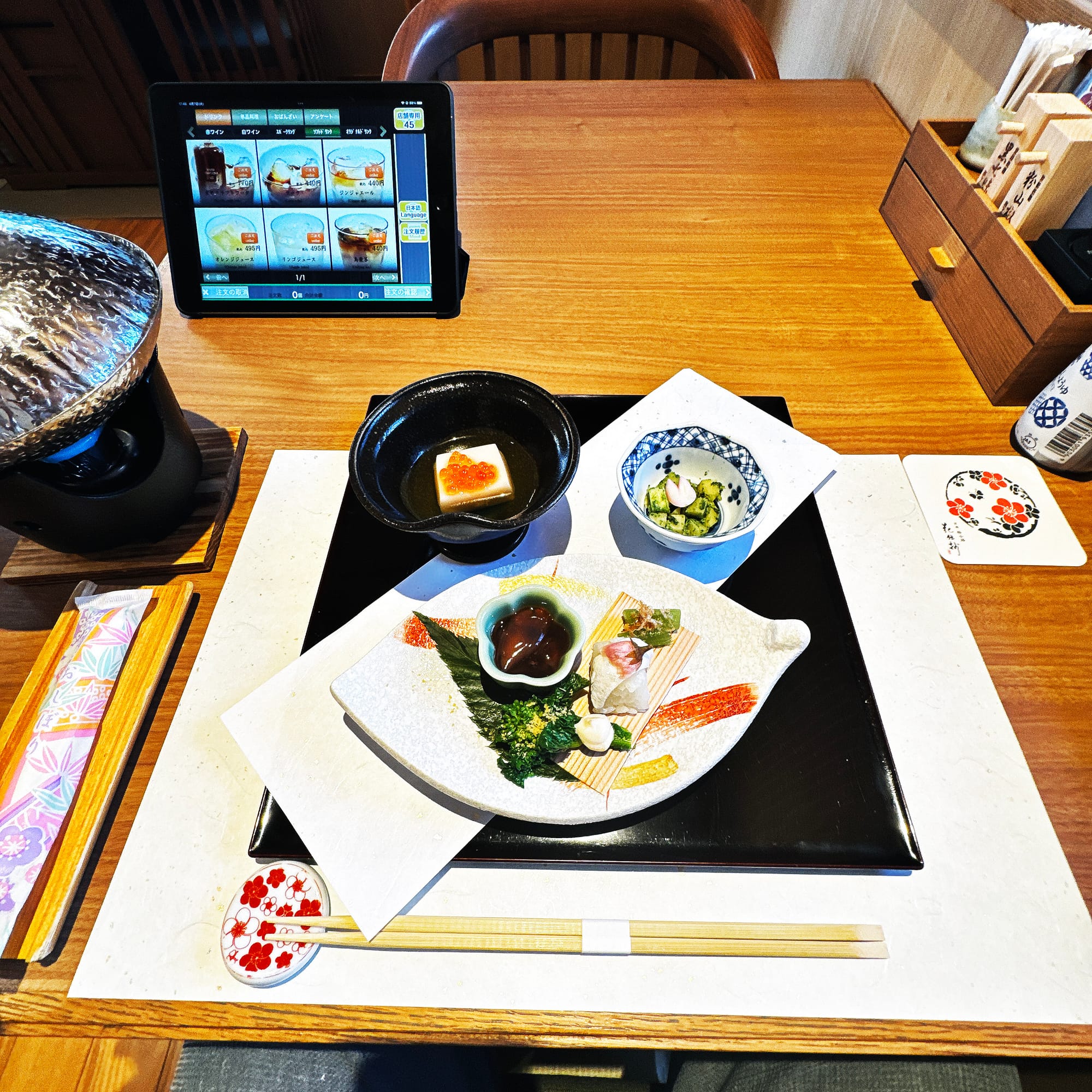
The opening courses set the tone without trying too hard. A small assortment of seasonal appetizers did what they’re supposed to: introduce variety, establish balance, and avoid overwhelming the palate.
The soup that followed was more unexpected. A green pea purée, creamy and slightly rich, leaned closer to Western texture than traditional Kyoto broth. Underneath, though, were familiar miso and dashi notes. It landed in that interesting space where something feels recognizable but slightly off—intentionally so.
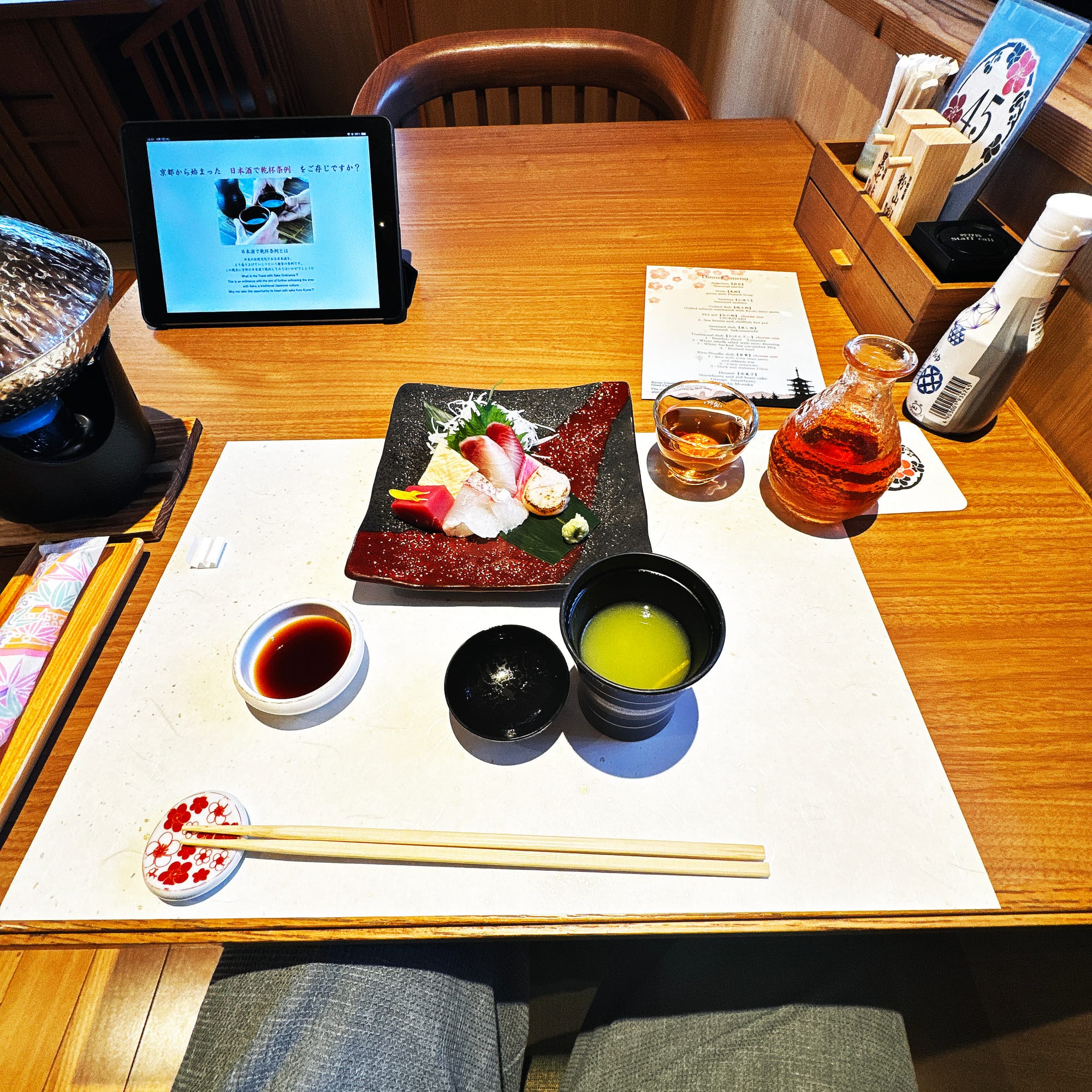
Sashimi brought things back to centre. Clean cuts, good texture, and no unnecessary embellishment. After the richer soup, it worked as a reset—quiet, precise, and ingredient-driven.
The Peak: Salmon and Sake
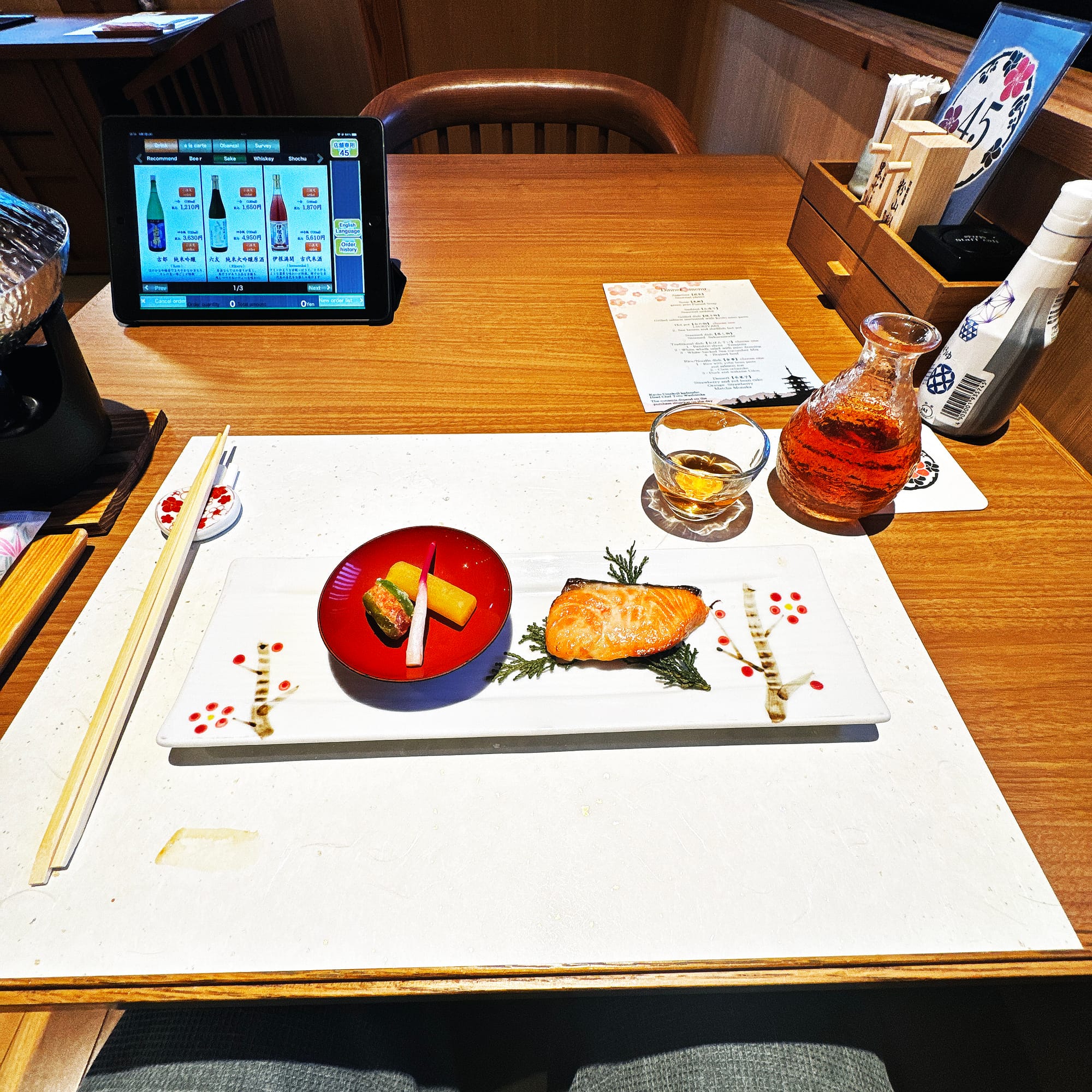
The grilled salmon—Saikyo-yaki—was the high point of the meal.
Marinated in Kyoto white miso and lightly caramelized, it hit the right balance of sweetness and umami without becoming heavy. The accompanying elements, including a soft, almost mashed sweet potato-like component, rounded things out and kept the dish from tipping too far into richness.
This is where the sake pairing came into focus.
A glass of Ine Mankai, a red sake made from ancient rice, brought a noticeable shift. Slightly sweet, lightly acidic, and almost wine-like, it amplified the sweetness of the miso glaze and added a fruit-forward dimension. The combination worked.
Both the dish and the sake elevated each other, turning a well-executed plate into something more memorable.
Slowing Things Down
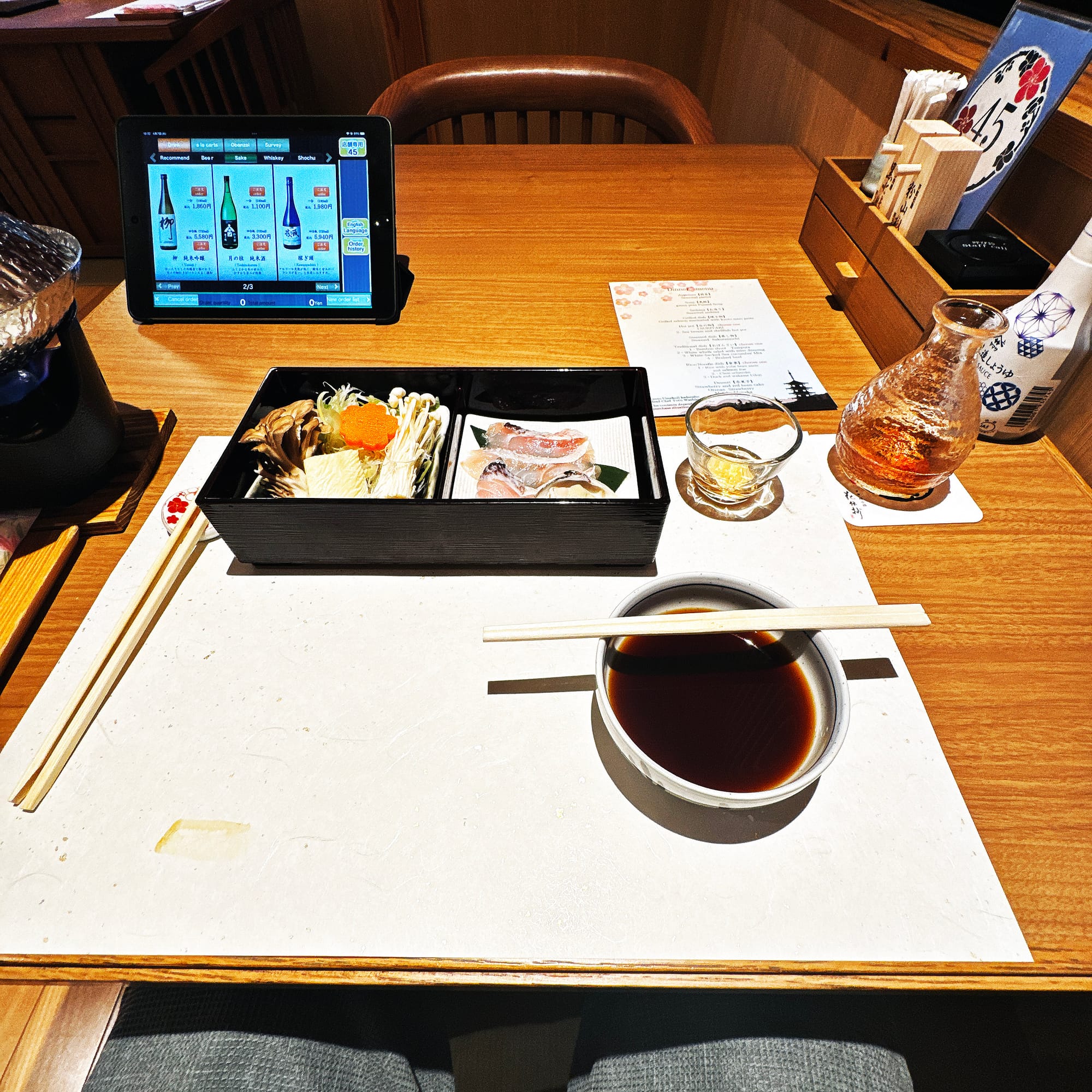
From there, the meal deliberately pulled back.
The sea bream hotpot was all about restraint. Light dashi, briefly cooked fish, and a broth that developed gradually as ingredients were added. It didn’t have the immediate impact of the salmon, but it rewarded attention. The longer you sat with it, the more it revealed—subtle sweetness, layered umami, and a sense of calm.
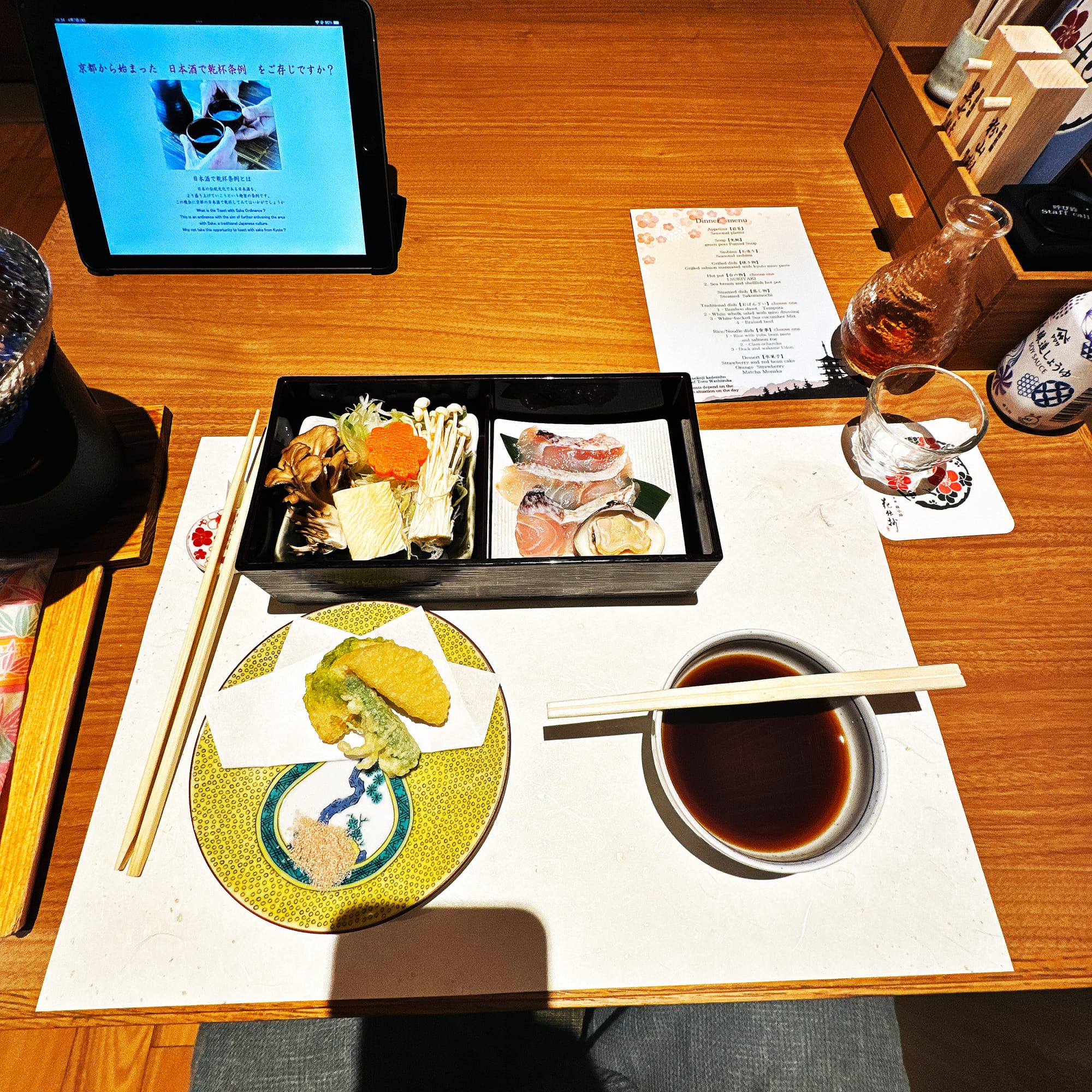
Bamboo shoot tempura followed. Crisp, seasonal, and understated. Not a standout on its own, but it introduced texture at the right moment without disrupting the overall flow.
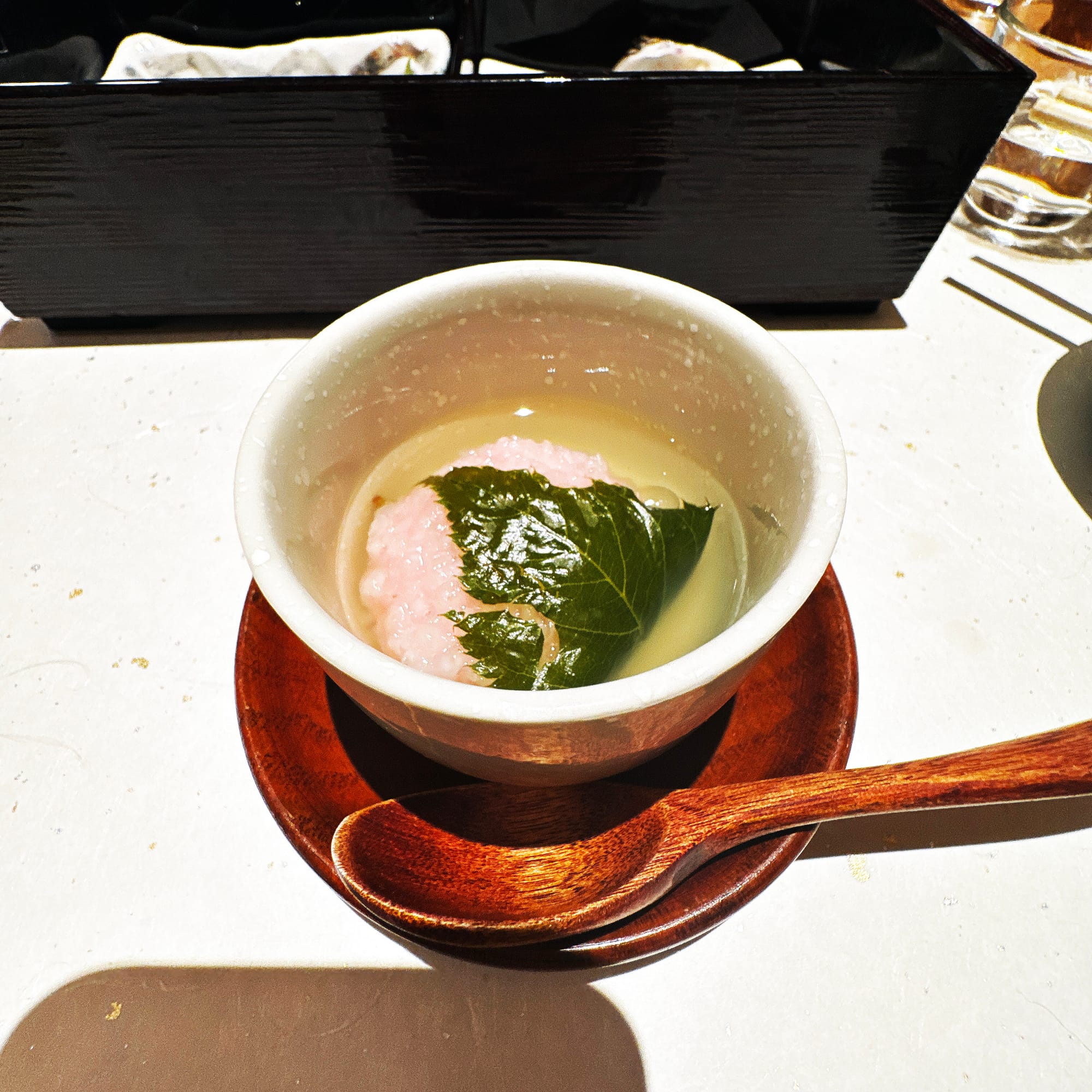
A steamed sakuramochi-style dish came next—soft, slightly floral, and almost mousse-like in texture. Again, not a dish that announces itself, but one that reinforces the Kyoto preference for subtlety and mood over intensity.
Pairing Becomes the Focus
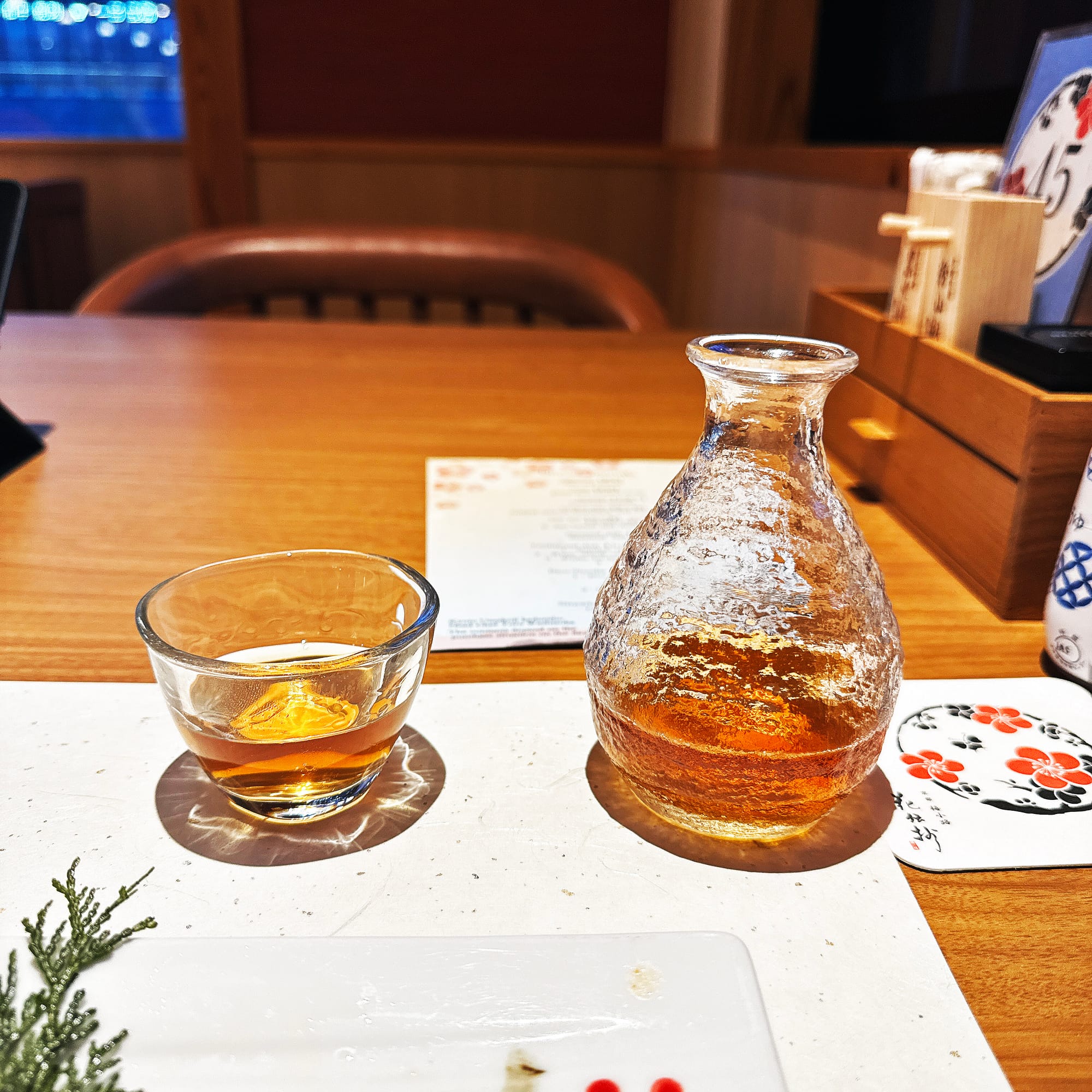
By this point, the sake experiment had become as interesting as the food itself.
Switching to a more traditional, clear junmai-style sake made the contrast obvious.
Where the red sake emphasized sweetness and fruit, the clear sake did the opposite—it integrated. It didn’t draw attention to itself. Instead, it extended the flavours of the dish, particularly in the hotpot and subsequent courses.
This distinction became most apparent with the ochazuke.
The Resolution
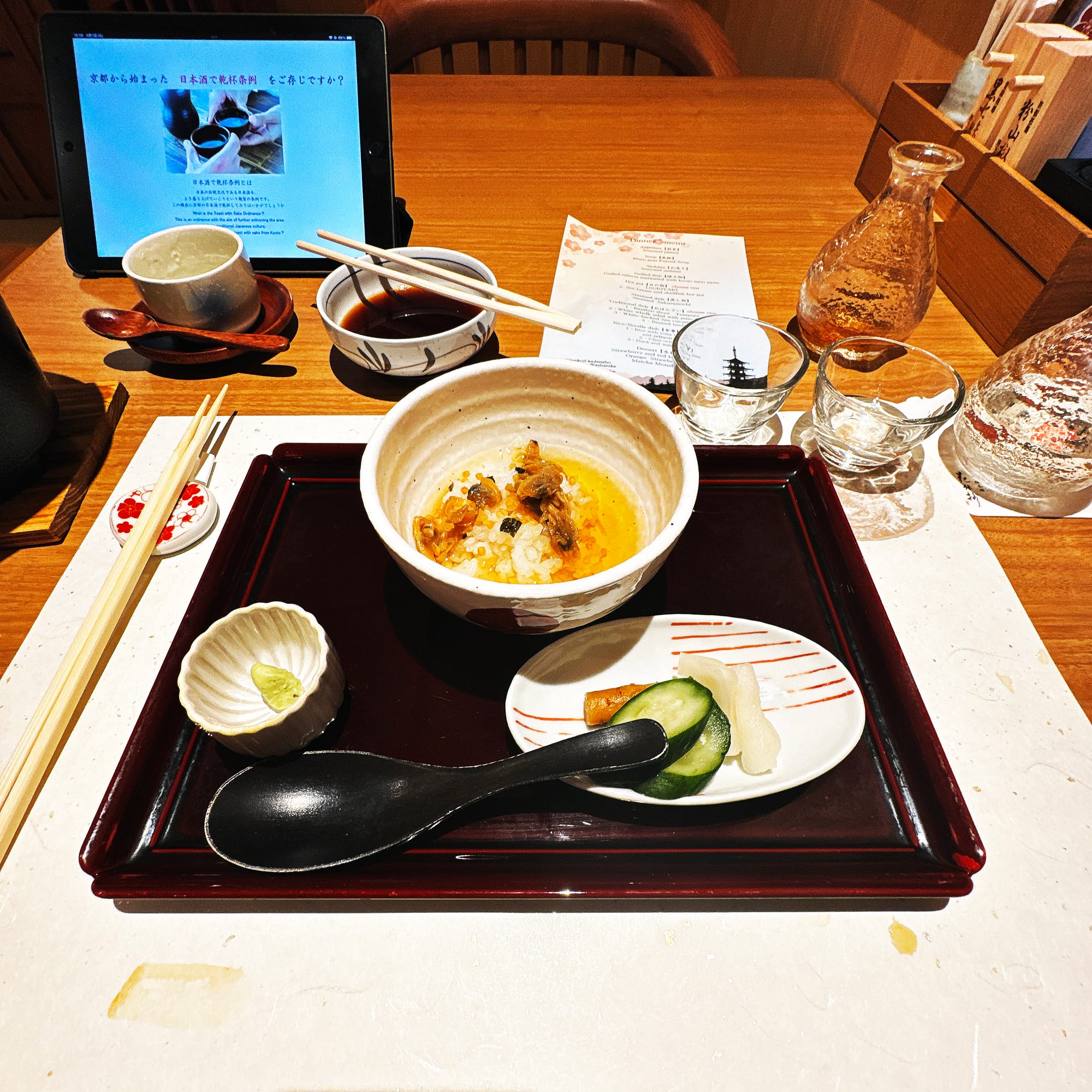
The ochazuke—rice in broth, already assembled—was the quietest dish of the meal. Light, warm, and deliberately understated. No theatrics, no customization. Just a balanced, calming finish.
With the red sake, it felt off. Too expressive, too sweet, slightly disruptive.
With the clear sake, it clicked. The drink disappeared into the dish, reinforcing the broth and extending its umami. This was the moment where harmony mattered more than contrast.
A small serving of pickled bamboo shoot followed, adding a bit of crunch and sharpness—almost ginger-like—before moving into dessert.
Dessert and a Return to Expression
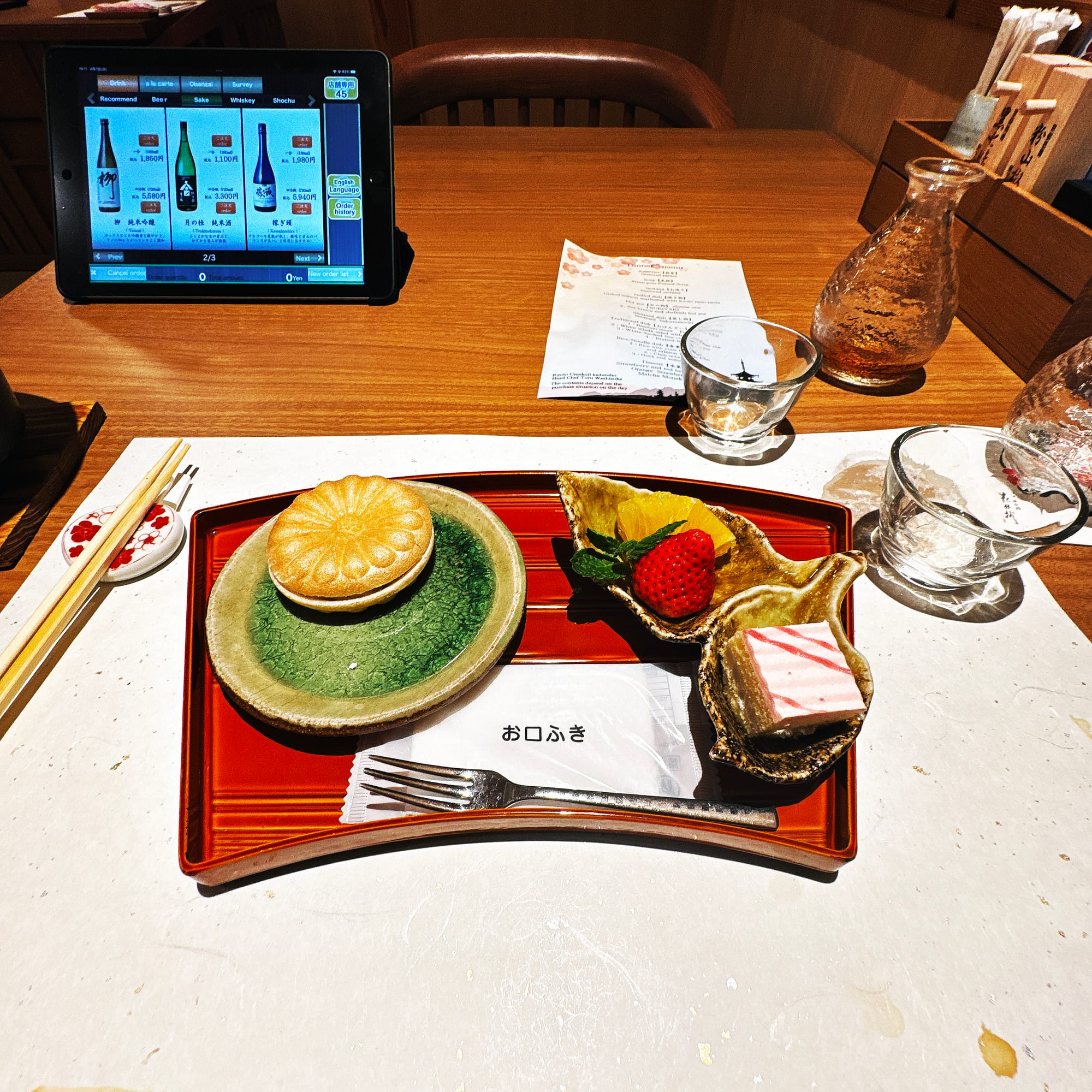
Dessert brought things back toward expression, though still within restraint.
A strawberry and red bean cake stood out. Sweet, but not overly so, with the strawberry tasting clean and distinct rather than sugared into submission. Paired again with the red sake, the fruit lifted noticeably. The acidity and slight sweetness of the sake amplified the strawberry, making it more vivid.
Fresh fruit did its job as a reset, while a monaka wafer—crisp but dry—felt slightly out of place. Not bad, but less cohesive than the rest of the course.
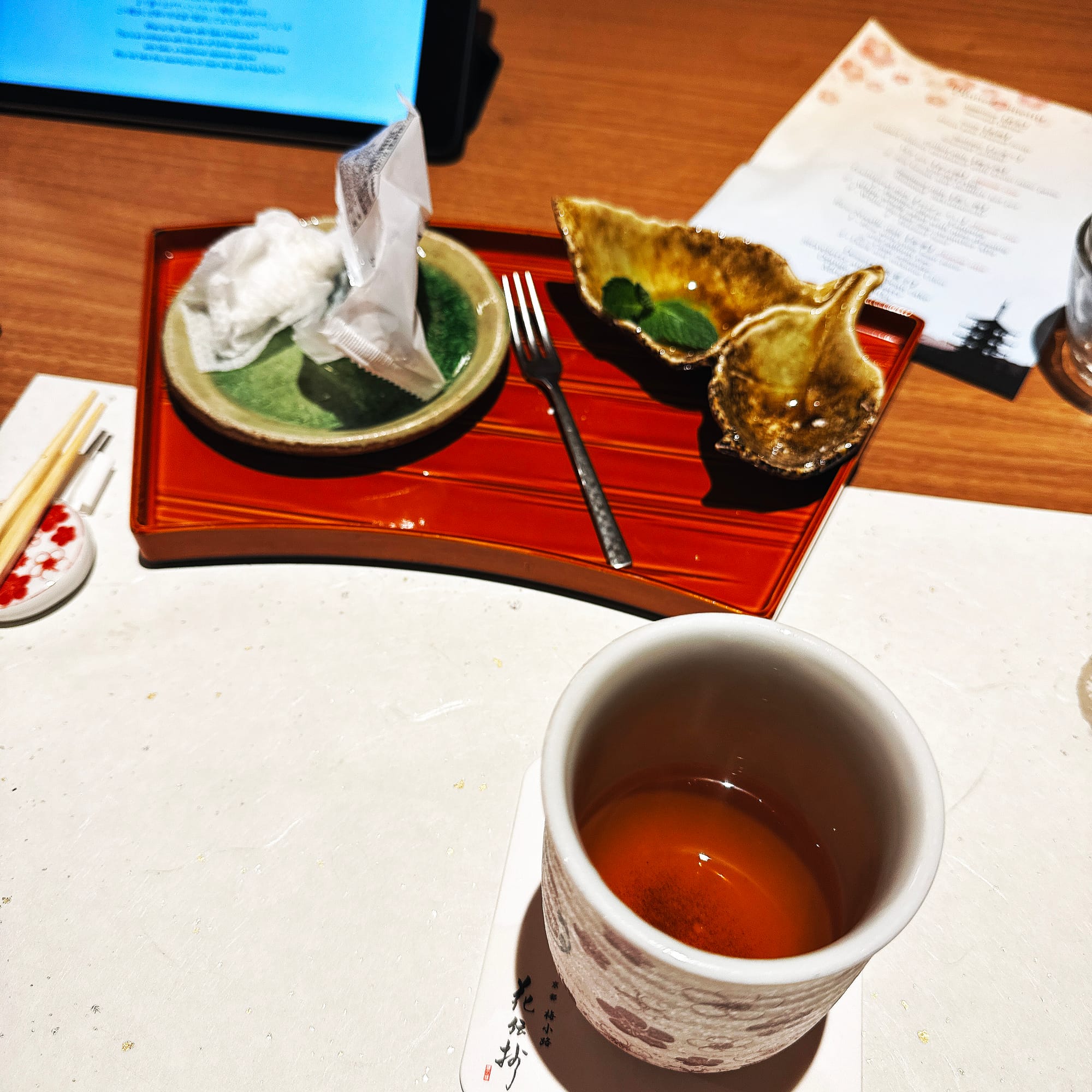
The meal closed with green tea. High quality, if not exceptional, with enough astringency to cleanly reset the palate and signal the end of the evening.
Final Thoughts
The meal followed a clear and well-executed arc:
•	Light and composed at the start
•	A defined peak with the salmon
•	A gradual shift into refinement and subtlety
•	A quiet, balanced resolution
What stood out most wasn’t any single dish, but how the experience changed depending on what you drank alongside it.
The red sake highlighted and amplified. The clear sake balanced and integrated.
Neither was inherently better. Each simply worked—or didn’t—depending on the moment.
That interplay ended up being the most interesting part of the evening.
If anything, the takeaway is simple:
Good food matters.
But how you pair it can completely change the story.